Quantum computing represents one of the most revolutionary technological frontiers of the 21st century, promising to transform how we approach complex computational problems. Unlike classical computers that have served us for decades, quantum computers harness the bizarre and counterintuitive principles of quantum mechanics to process information in fundamentally new ways.
What is quantum computing?
Quantum computing is a multidisciplinary field comprising aspects of computer science, physics and mathematics that uses quantum mechanics to solve complex problems faster than classical computers. At its core, quantum computing exploits quantum mechanical phenomena such as superposition, entanglement and quantum interference to perform operations that would be impossible or prohibitively slow on traditional machines.
This is a fundamental shift from conventional information processing. Where classical computers process information sequentially using bits that exist as either 0 or 1, quantum computers use quantum bits (qubits) that can exist in multiple states simultaneously through quantum superposition. This lets quantum computers explore vast solution spaces in parallel, potentially solving certain problems exponentially faster than their classical counterparts.
Core principles
Qubits
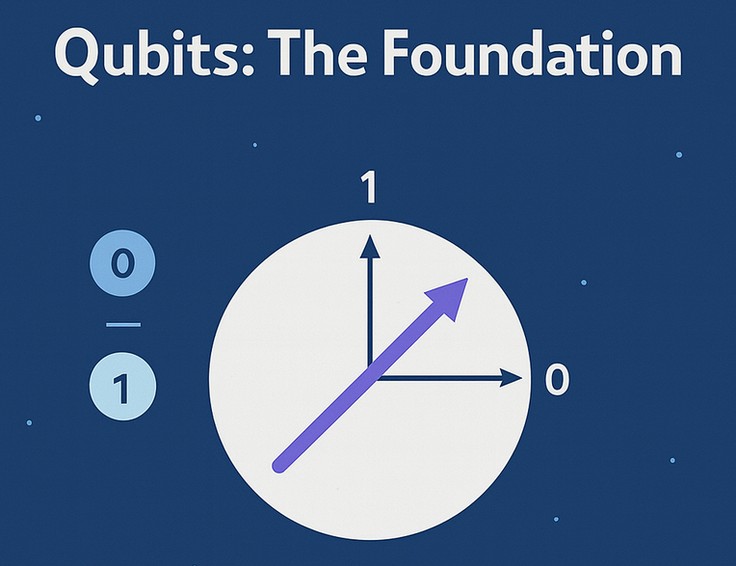
The basic unit of quantum information is the qubit, which serves the same fundamental role as the bit in classical computing but with remarkable differences. While classical bits are binary and can only be in one state at a time (0 or 1), qubits can exist in a superposition of both states simultaneously. This means a qubit can be 0, 1 or any combination of both states, dramatically expanding computational possibilities.
Superposition
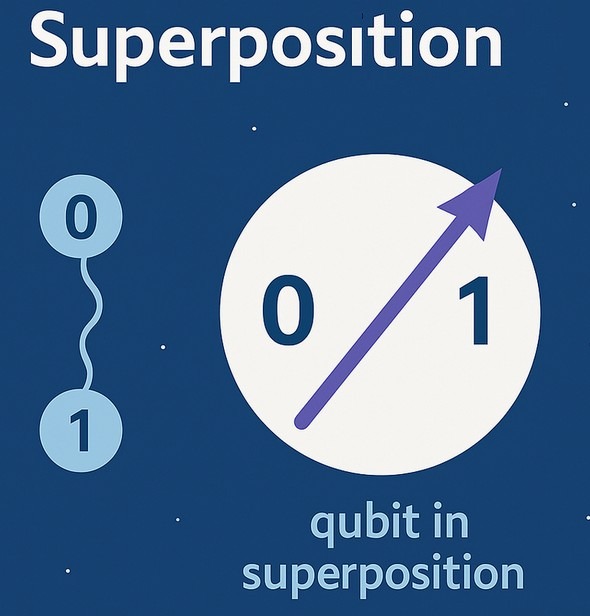
Superposition is perhaps the most important principle behind quantum computing's power. This quantum property allows particles to exist in multiple states simultaneously until measured. In computing terms, it enables quantum systems to process exponentially more information than classical systems.
Entanglement
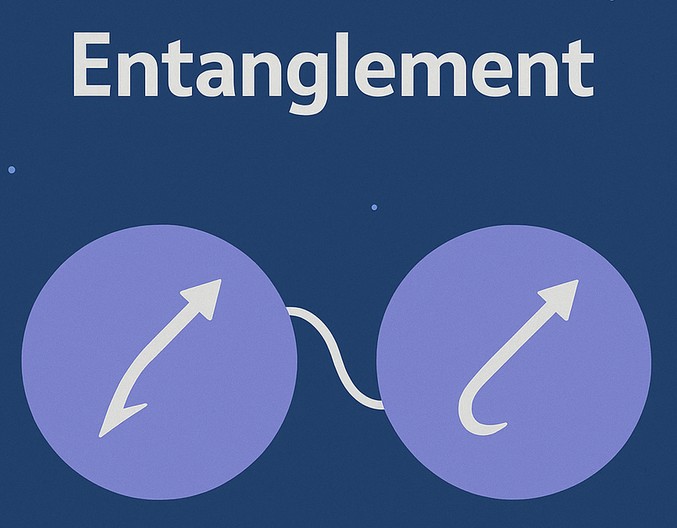
Quantum entanglement occurs when qubits become correlated in such a way that the quantum state of each qubit cannot be described independently. When qubits are entangled, measuring one instantly affects the others regardless of the distance between them. This lets quantum computers draw conclusions about one particle by measuring another, enabling powerful computational operations and faster problem-solving.
Quantum interference
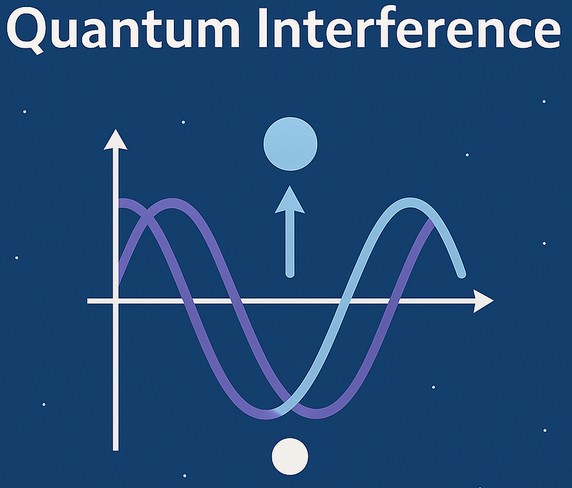
Quantum interference is the intrinsic behavior of qubits that lets quantum algorithms amplify correct answers while canceling out incorrect ones. This principle is crucial for ensuring that quantum computers return the optimal solution with high probability when measurements are made.
Types of quantum computers
The quantum computing landscape includes several distinct technological approaches, each with unique advantages and challenges.
Superconducting quantum computers
These systems use superconducting circuits as qubits and operate at extremely low temperatures near absolute zero. Companies like IBM, Google and SpinQ use this technology, which offers good scalability and mature fabrication techniques. Recent advances have significantly improved error correction capabilities.
Trapped ion systems
Trapped ion quantum computers use charged atomic particles (ions) confined by electromagnetic fields as qubits. These systems offer high precision and long coherence times, with companies like IonQ and Honeywell leading development efforts.
Photonic quantum computers
These systems use light particles (photons) as qubits and can operate at room temperature, making them more accessible than other approaches. Companies like Xanadu are developing photonic-based quantum computers that offer unique advantages for certain applications.
Quantum annealers
Quantum annealers use a physical process to find optimal solutions to complex optimization problems. D-Wave produces annealers that can handle larger numbers of qubits than gate-based systems but are limited to specific problem types.
Quantum algorithms and applications
Fundamental algorithms
Several groundbreaking algorithms demonstrate quantum computing's potential advantages:
Shor's algorithm: developed by Peter Shor in 1994, it can factor large numbers exponentially faster than classical methods, with significant implications for cryptography.
Grover's algorithm: provides a quadratic speedup for searching unsorted databases, reducing search time from O(N) to O(√N).
Quantum Fourier Transform (QFT): a fundamental component used in many quantum algorithms, including Shor's algorithm and phase estimation procedures.
Variational Quantum Eigensolver (VQE): a hybrid quantum-classical algorithm designed for quantum chemistry simulations and material science applications.
Real-world applications
Quantum computing shows promise across numerous industries:
Drug discovery: quantum computers can simulate complex molecular interactions beyond classical computational capabilities, potentially accelerating pharmaceutical research and development.
Financial modeling: advanced risk analysis, portfolio optimization and fraud detection benefit from quantum computing's ability to process complex financial models simultaneously.
Cybersecurity: quantum computing both threatens current encryption methods and enables new quantum cryptographic techniques like quantum key distribution (QKD).
Logistics and optimization: route optimization, supply chain management and warehouse design can be dramatically improved using quantum algorithms.
Artificial intelligence and machine learning: quantum machine learning algorithms could improve pattern recognition, natural language processing and optimization.
Current state and challenges
Technical limitations
Despite remarkable progress, quantum computing faces significant challenges:
Current capabilities
As of 2025, approximately 1,000 quantum computers exist globally, with around 100 to 200 fully operational. The field is in what researchers call the Noisy Intermediate-Scale Quantum (NISQ) era, where quantum computers can perform certain specialized tasks but have not yet achieved broad practical advantages over classical computers.
Quantum vs. classical computing
The differences between quantum and classical computing extend beyond just speed:
| Classical computing | Quantum computing |
|---|---|
| Processes information sequentially using bits (0 or 1) | Processes in parallel using qubits that hold superpositions |
| N bits perform at most N operations at once | N qubits can represent up to 2ⁿ states at once |
| Superior for most everyday, general-purpose tasks | Excels at problems with hidden structure or patterns |
Future prospects
Near-term outlook
The quantum computing market continues to attract significant investment, with $1.6 billion in venture funding in 2024 despite broader tech investment declines, while public sector support is expected to exceed $10 billion over the next three to five years.
Long-term potential
Industry projections suggest quantum computing could create $450 billion to $850 billion in economic value as the technology matures. Key milestones expected include:
- 5,000 operational quantum computers by 2030.
- Fault-tolerant quantum computers capable of handling complex problems by 2035 or later.
- Revolutionary applications in drug discovery, materials science, financial modeling and artificial intelligence.
Challenges ahead
The path forward requires overcoming several hurdles:
- Developing robust quantum error correction methods.
- Scaling systems to millions of qubits while maintaining coherence.
- Creating user-friendly quantum programming tools and interfaces.
- Building a skilled quantum workforce through education and training initiatives.
Conclusion
Quantum computing represents a paradigm shift that could revolutionize how we approach some of the world's most complex problems. While significant technical challenges remain, the field is rapidly advancing from theoretical concepts to practical applications. The unique properties of quantum mechanics — superposition, entanglement and interference — enable computational capabilities that classical computers simply cannot match for certain problem types.
As we move forward, quantum computing will likely complement rather than replace classical computing, with each technology excelling in different domains. Organizations across industries are beginning to explore quantum applications, and those who start preparing now will be best positioned to leverage this technology as it matures.